

WRAPROWS and WRAPCOLS are two new functions of Excel 2024. This productivity feature lets you quickly reorganize messy data lists into neat data blocks without manual copying. Here is how to use these two functions with simple examples.

If you’ve ever stared at a spreadsheet with 100+ items crammed into a single row or column, you know how painful it is to work with. Scrolling endlessly, squinting at tiny cells, and struggling to spot patterns—it’s enough to make anyone want to pull their hair out.
WRAPROWS and WRAPCOLS functions let you transform unwieldy lists into clean, readable data blocks in seconds—no copying, pasting, or manual rearranging required.
Table of Contents
What Are WRAPROWS and WRAPCOLS?
Think of these functions as a magic wand for disorganized data. WRAPROWS takes a long horizontal list and splits it into multiple rows. WRAPCOLS does the same thing, but for vertical columns. The best part is that they’re ridiculously simple to use.
How to Use WRAPROWS: A Real Example
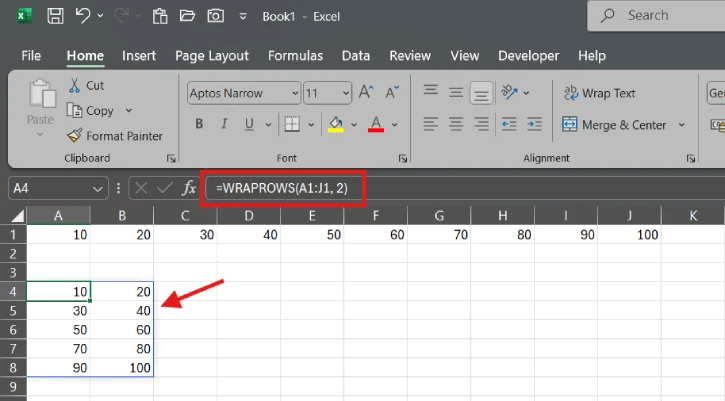
Let’s say you have numbers 10 to 1,00 stretched across cells A1 to J1—one long, hard-to-read row. Here’s how to fix it:
- Click on the cell where you want your new block to start (like A4)
- Type this formula:
=WRAPROWS(A1:J1,2) - Press Enter
That’s it. The 2 at the end tells Excel you want 2 numbers in each row. Suddenly, your messy row becomes a clean, organized block of data that’s actually easy to analyze.
Want 3 items per row instead? Change the 2 to a 3. Want 5? Use 5. The flexibility is yours.
ALSO READ: Getting Realistic Averages: How to Exclude Outliers in Excel and Calc
WRAPCOLS Works Exactly the Same Way
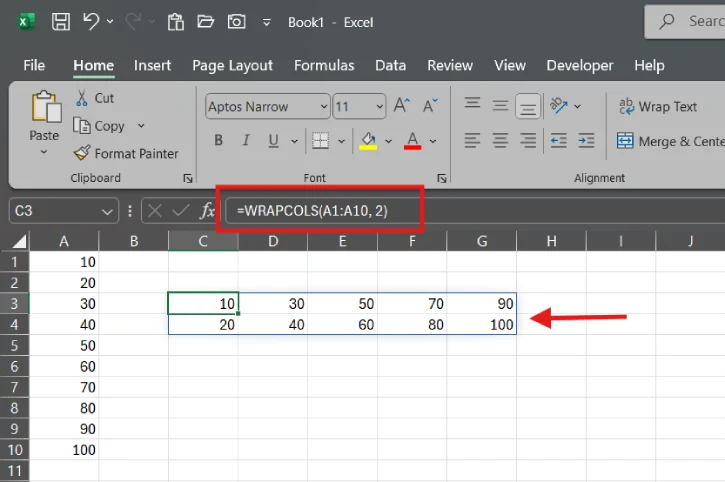
If you’re dealing with long vertical columns instead of rows, WRAPCOLS is your answer. The syntax is identical—just swap out WRAPROWS for WRAPCOLS, and it handles the rest.
No need to learn a whole new skill. If you can use WRAPROWS, you can use WRAPCOLS.
ALSO READ: Stop Building Pivot Tables in Excel – Use GROUPBY and PIVOTBY Tables
Why These Functions Matters
Before these functions, reorganizing data meant:
- Manually selecting and copying chunks of data
- Pasting them into new rows or columns
- Spending 20 minutes on something that should take 20 seconds
- Risking mistakes along the way
Now, one formula does all of that work for you. Whether you’re a data analyst, business manager, or spreadsheet enthusiast, WRAPROWS and WRAPCOLS save you time and frustration.
Conclusion
Excel 2024’s WRAPROWS and WRAPCOLS functions are proof that Microsoft is listening to what users actually need. They’re simple, powerful, and they solve a real problem that spreadsheet users face every day.
If you upgrade to Office 2024 and work with lists regularly, these functions will become part of your daily toolkit. Stop wrestling with messy data—let Excel do the heavy lifting for you. Your future self (and your eyes) will thank you.

